
Designing for the Actual Site, Not Just the Equipment
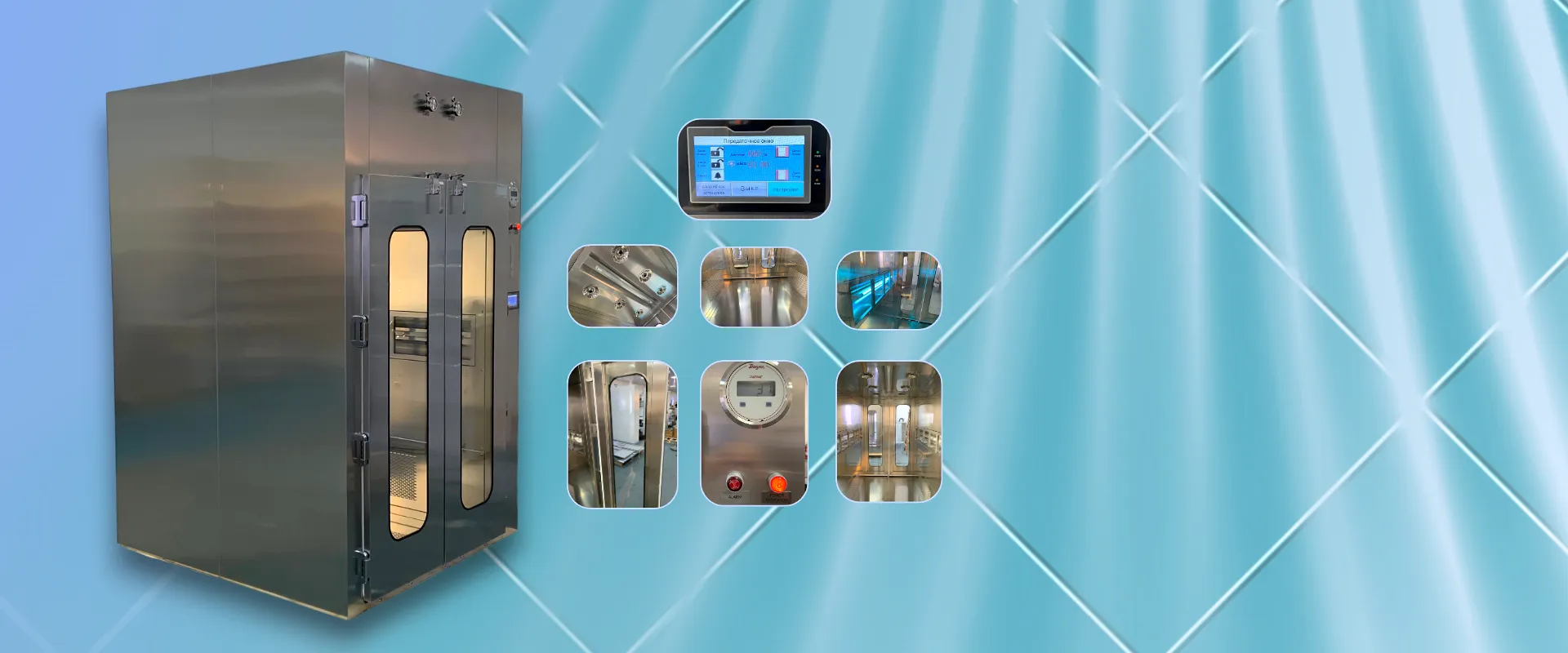
During a recent project for a pharmaceutical manufacturing facility, we were asked to design customized LAF Pass Boxes for controlled material transfer.
As usual, our engineering team considered maintenance access during the initial design.
Our standard approach is to provide internal maintenance access, so that technicians can access the HEPA filter, motor/blower and other components from inside the equipment.
But when we looked more closely at the actual installation conditions, we found a problem.
The available internal space was not sufficient.
We recently worked on a pharmaceutical manufacturing project where the customer had specific requirements for maintenance access because of the actual installation conditions on site.
Instead of asking the customer to change the cleanroom layout to accommodate a standard pass box, we adjusted the equipment design to fit the project.
The available internal space was not sufficient.
The LAF Pass Box had to be installed in a relatively restricted area. Although internal access could be designed into the equipment, there was simply not enough working space inside the unit to comfortably remove and replace the HEPA filter and motor.
We Went Back to the Customer and Discussed the Installation Conditions
Instead of forcing the original design, we discussed the situation with the customer’s engineering team.
We reviewed the actual installation location and considered:
- The surrounding cleanroom walls
- Available service space
- Equipment position
- Future HEPA filter replacement
- Motor/blower maintenance
- Access for maintenance personnel
After reviewing the site conditions, the customer suggested that maintenance access from the side of the LAF Pass Box would be more practical.
This changed the design approach.
Rather than maintaining our original internal-access configuration, we redesigned the equipment to provide side maintenance access.
This gave the maintenance team the additional working space they needed to remove and replace the HEPA filter and access the motor without requiring unnecessary space inside the pass box.
The Important Lesson
For us, this was a good example of why customized cleanroom equipment should be treated as an engineering project, rather than simply selecting a standard product from a catalogue.
Our initial design was based on our usual maintenance approach.
But the final solution came from combining:
Our equipment experience + the customer’s knowledge of the site + actual installation conditions
The customer knew the site better than anyone.
Our engineering team knew the equipment better than anyone.
The best solution came from bringing those two perspectives together.
Maintenance Access Can Be Customized
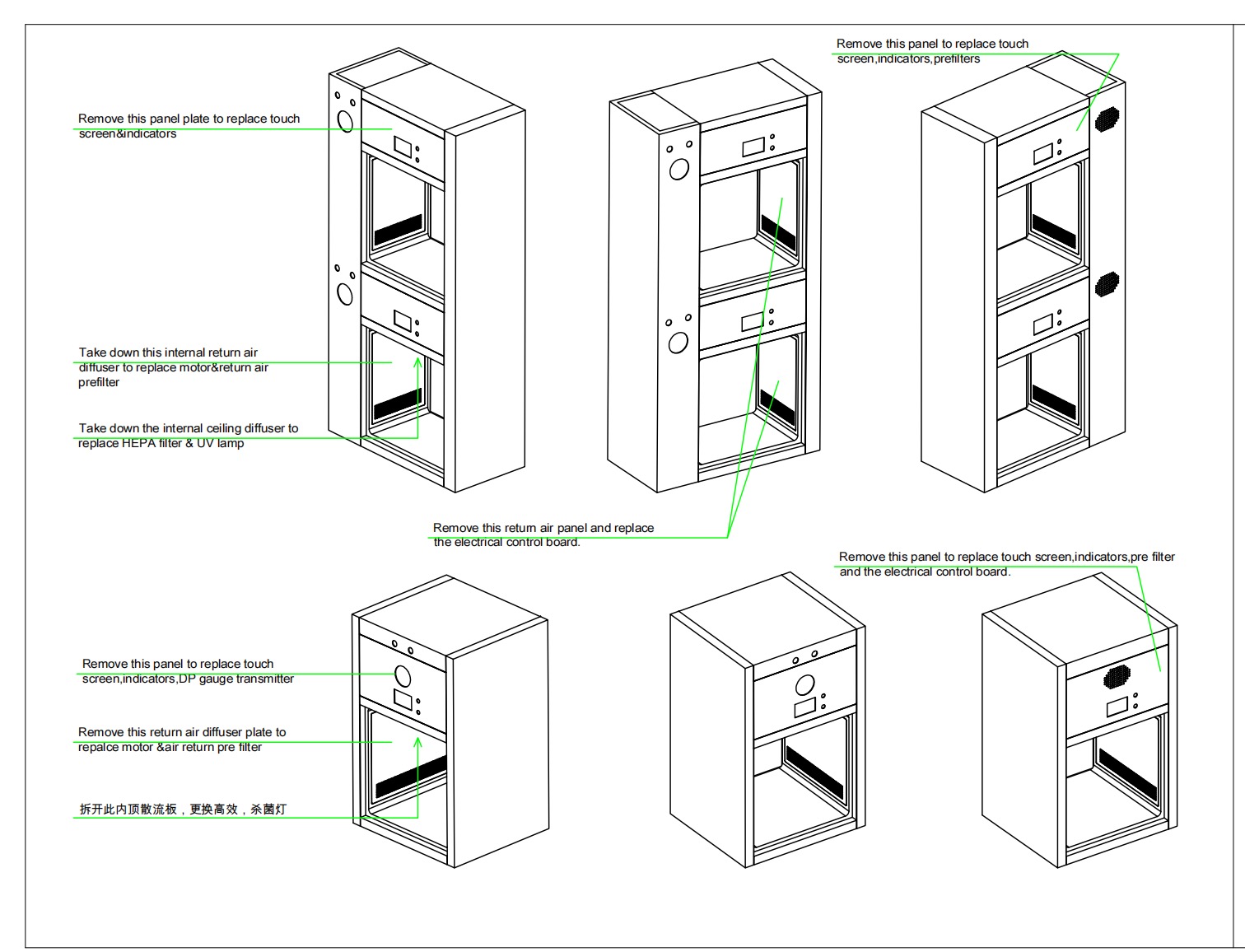
Depending on the installation conditions, we can consider different maintenance-access arrangements for LAF Pass Boxes, including:
Internal Access
Suitable when sufficient internal working space is available and the equipment configuration allows the HEPA filter and motor to be serviced effectively.
Side Access
A practical option when the internal space is restricted but sufficient clearance is available beside the equipment.
Top Access
Can be considered where the equipment is installed below an accessible ceiling or service area.
Customized Access
For more complicated installations, the maintenance arrangement can be developed around the actual cleanroom layout and available service space.
The important point is that there is no single maintenance-access configuration that is ideal for every installation.
The Same Principle Applies to Other Cleanroom Equipment
This engineering approach is not limited to LAF Pass Boxes.
We have encountered similar requirements with other customized cleanroom equipment.
For example, sampling booths, dispensing booths, air showers, pass boxes, clean booths and laminar flow equipment may all have different installation and maintenance constraints.
A sampling booth installed against a wall may require a different service-access arrangement from one installed in an open production area.
An air shower may need a customized door arrangement because of the personnel or material flow.
A pass box may require different access depending on the wall construction and available service space.
These are not unusual problems in real projects.
They are simply part of designing equipment that needs to work within an existing cleanroom environment.
This Is What We Mean by Engineering-Oriented Customization
At Flair, customization is not limited to changing the dimensions or stainless-steel material.
It can also involve:
- Maintenance access
- Filter replacement method
- Motor/blower access
- Installation method
- Door configuration
- Interlocking system
- Airflow arrangement
- Control system
- Ceiling and wall integration
- Surrounding equipment
- Available service space
Our engineering team can review the customer’s layout, installation drawings, equipment location and site constraints before finalizing the equipment design.
Sometimes the best solution is already obvious from the drawing.
Sometimes, as in this project, it takes a discussion with the customer to identify the most practical solution.
Both are part of engineering.
A Practical Point for Pharmaceutical Cleanroom Projects
If you are designing a GMP pharmaceutical cleanroom and have limited space around your LAF Pass Box, don’t only consider:
“Can we install the equipment here?”
Also ask:
“Can we maintain it here?”
And specifically:
- Can the HEPA filter be removed?
- Can the motor/blower be accessed?
- Is there enough working space for maintenance personnel?
- What happens if the filter needs replacement several years later?
- Is there a better access direction based on the actual site?
These questions are much easier to solve before manufacturing than after installation.
From Site Requirement to Customized Equipment
This project was a relatively simple change in terms of equipment design.
But it reflects the way we prefer to work at Flair:
Customer Requirement
→ Site Condition Review
→ Engineering Discussion
→ Customized Design
→ Manufacturing
→ Project Delivery
We don’t believe customization means making every product completely different.
It means changing the right things when the project requires it.
In this case, the change was simply the maintenance-access direction.
But that small change made the equipment much more practical for the actual site.
A good cleanroom equipment design should not only work when it is installed. It should also make sense when someone needs to maintain it years later.
That is the kind of engineering-oriented customization we aim to provide at Flair—for LAF Pass Boxes and for other cleanroom equipment and HVAC filtration solutions.